


Table of Contents
- The 5-Minute Visual Test for High Quality Graphic Tees
- What Is the Best Fabric for Graphic Tees?
- Stitching and Construction Details That Separate Quality Tees
- Screen Printing vs Direct to Garment: Which Print Lasts Longer?
- How to Wash Graphic Tees to Prevent Cracking and Peeling
- Price-to-Quality Ratio: What You're Really Paying For
- Conclusion: Trust Your Hands, Not Just the Tag
- Frequently Asked Questions
Last Updated: September 5, 2026
Buying a graphic tee online is a gamble. Learning how to identify high quality graphic tees before you buy saves you money and disappointment. At Indiana Bears Progress, our brand depends on delivering premium fan gear that lasts. You don't need to be a textile expert to spot the difference; a quick hands-on check reveals almost everything about a shirt's lifespan.

High quality graphic tees are defined by fabric weight, construction, and print application. Below, we walk through a visual test, break down the best fabrics, compare printing methods, and give a care routine that keeps tees looking new.
The 5-Minute Visual Test for High Quality Graphic Tees
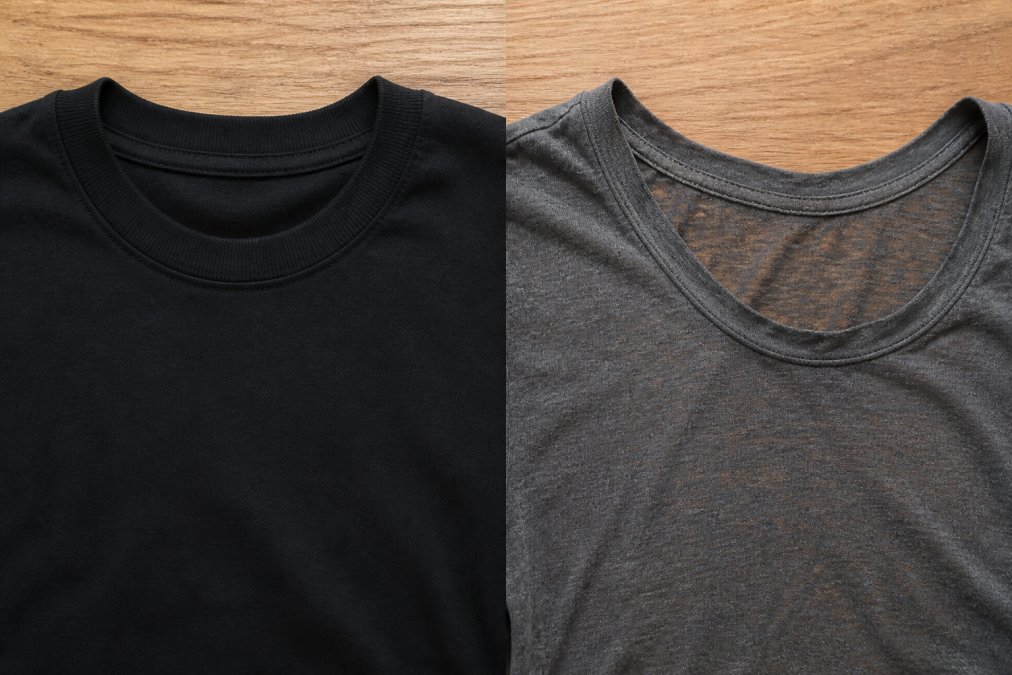
You can assess a tee's quality in under five minutes without washing it once. This is about training your eye and hands to spot physical markers of quality. Below is a visual checklist contrasting a premium tee against a low-quality one.
Visual Comparison: Premium vs. Low-Quality Tee
| Feature | High-Quality Tee | Low-Quality Tee |
|---|---|---|
| Fabric Opacity | Opaque; you cannot see your hand through it. | Translucent; light passes through easily, revealing a thin knit. |
| Collar Ribbing | Tight, substantial ribbing that snaps back when stretched. | Loose, flimsy ribbing that stays stretched out. |
| Shoulder Seams | Flat-locked or taped seams that lie smooth. | Single-needle seams that pucker or roll. |
| Print Surface | Flexible, slightly textured, and integrated with the fabric. | Raised, rubbery, and feels like a plastic sticker. |
| Hem Stitching | Double-needle stitching with a clean, consistent line. | Single-needle stitching with skipped stitches or loose threads. |
The Pinch and Stretch Test
Two physical tests reveal the most about a shirt's construction.
1. The Collar Snap Test: Pinch the collar between your thumb and forefinger and give it a firm tug. On a quality tee, the ribbing should feel dense and snap back to its original shape immediately. On a cheap tee, the collar will feel like a thin piece of elastic that stretches easily and takes a moment to recover. This is the first area to fail, so this test is a strong predictor of overall durability.
2. The Hem Stretch Test: Grip the bottom hem with both hands and stretch it horizontally. Watch the stitching. On a well-made shirt, the seams should hold firm without gaping or puckering. The fabric itself should resist stretching, indicating a tight, high-twist yarn. If the fabric stretches easily and the seam puckers, the shirt is likely made from a loose, low-grade knit that will lose its shape.
The Fingernail Print Test
Run your fingernail gently across the surface of the design.
- The 'Sticker' Feel: If your nail catches on a raised, rubbery layer, you are looking at a low-quality plastisol print. This type of print sits on top of the fabric and will crack and peel within a few washes.
- The 'Integrated' Feel: A quality print, whether screen printed or DTG, should feel like part of the fabric. It will have a slight texture but will not feel like a separate layer. Your nail should glide over it smoothly.
This single test filters out most low-quality graphic tees. If a print feels like a sticker, it will fail.
What Is the Best Fabric for Graphic Tees?
The best fabric for graphic tees is 100% ring-spun cotton with a GSM between 180 and 220. This weight range provides density for durability while remaining breathable. Heavier fabrics drape better and resist shrinkage, making them the industry standard for premium blanks.
A higher GSM means more cotton per square meter, translating to a longer-lasting shirt that holds its shape. Many brands use garment-dyed or vintage wash processes, which soften the fabric upfront without sacrificing structural integrity.
Cotton vs. Blends: What to Look For
Pure cotton offers breathability and a soft hand-feel, but it can shrink if not preshrunk. Cotton-polyester blends resist wrinkles and shrinking better, but they feel less breathable and can pill. For graphic tees, 100% cotton is usually safer because it provides a better surface for print adhesion.
Look for labels mentioning ring-spun or combed cotton. Ring-spun cotton is twisted into finer, stronger yarns; combed cotton removes short fibers, resulting in a softer, more durable textile. Avoid shirts that feel thin or have a rough, canvas-like texture; these are typically made from carded, open-end yarns that degrade quickly.
Stitching and Construction Details That Separate Quality Tees
A graphic tee's lifespan is determined more by its stitching than its fabric. Premium tees feature double-needle stitching on hems and sleeves, preventing unraveling. Look for flat-locked seams in the shoulders, which create a smooth, durable join that lies flat against the skin.
The collar is the first part of a tee to fail. A quality shirt uses tight, substantial neckline ribbing with a double-needle stitch. If the collar stretches when pulled, it will lose its shape. Also check for side seams; a tubular knit without side seams retains its shape better and avoids twisting.
Seam allowance should be consistent and generous. Sloppy stitching with loose threads or skipped stitches is a red flag. These details are invisible in product photos but are the primary difference between a tee that lasts five years and one that lasts five months.
Screen Printing vs Direct to Garment: Which Print Lasts Longer?
Understanding the difference between screen printing and Direct-to-Garment (DTG) is the first step, but the real question is: which one survives 20, 30, or 50 wash cycles? Here, we give you a simple, at-home wash test to evaluate print longevity.
The Technical Breakdown: Screen Print vs. DTG
Screen printing forces thick, opaque ink through a mesh stencil, creating a durable layer that sits on top of the fabric (madehow.com). It is the industry standard for bold graphics and resists cracking if cured correctly. The downside is a stiffer hand-feel and potential for fine cracks over time, especially if not washed inside out.
DTG printing uses a specialized inkjet printer to apply water-based ink directly into the fabric's fibers, resulting in a soft, breathable print. Modern DTG inks bond with cotton at a molecular level. The trade-off is that DTG prints are more susceptible to UV fading and can be less vibrant on dark fabrics with a lower-quality white ink base.
The 20-Wash Test: A Practical Guide to Print Longevity
You cannot tell how a print will age by looking at it in a store. The only reliable method is a controlled wash test. Here is a step-by-step protocol to evaluate any graphic tee at home.
- Baseline Photo: Take a close-up photo of the print in natural light. Note any initial surface texture or sheen.
- Wash Cycle 1-5: Turn the shirt inside out. Wash in cold water (below 85°F) on a gentle cycle with a mild, bleach-free detergent. Air dry flat.
- Wash Cycle 6-15: Continue the same cycle. After the 10th wash, inspect the print for hairline cracks, especially around high-stress areas like the collar and armpits.
- Wash Cycle 16-20: Switch to a normal cycle with warm water (up to 105°F) to simulate a less careful owner. After the 20th wash, take another close-up photo.
What to look for in the comparison:
- Cracking: Look for spiderweb-like lines in the ink. A quality screen print should show minimal to no cracking after 20 washes. A poor DTG print may show flaking or peeling.
- Fading: Compare the color saturation. DTG prints will fade slightly, but a high-quality one should retain its core color. A cheap print will look washed out and chalky.
- Adhesion: Run your fingernail gently across the print. If any ink chips off, the print has failed.
- Fabric Distortion: Check if the fabric around the print has puckered or shrunk, which indicates poor blank quality, not just a bad print.
Why This Test Matters
This test is the single most effective way to separate a $15 shirt from a $35 shirt. A manufacturer using a 180 GSM ring-spun cotton blank with a properly cured screen print or high-quality DTG printer will pass. A manufacturer cutting corners with a 140 GSM blank and a low-temp plastisol print will fail.
How to Wash Graphic Tees to Prevent Cracking and Peeling
Washing graphic tees incorrectly is the fastest way to ruin them. Always turn the shirt inside out before washing to protect the print from friction. Use cold water, as heat breaks down ink adhesion and accelerates cotton shrinkage.
Avoid fabric softeners and bleach, which degrade both the print and fabric (the CDC). Air drying is safest, as high heat causes cracking and shrinkage. If using a dryer, use the lowest heat setting and remove the shirt while slightly damp.
| Care Step | Action | Why It Matters |
|---|---|---|
| Washing | Turn inside out, cold water, gentle cycle | Reduces friction and heat damage to print |
| Detergent | Use mild, bleach-free detergent | Harsh chemicals break down ink adhesion |
| Drying | Air dry flat or hang | High heat causes cracking and shrinkage |
| Ironing | Never iron directly on the print | Heat melts the ink and causes peeling |
| Storage | Fold, don't hang heavy tees | Hanging stretches the collar and shoulders |
This care routine is non-negotiable if you want your graphic tees to look new. A high quality print can last for hundreds of washes, but only with proper care.
Price-to-Quality Ratio: What You're Really Paying For
When a graphic tee costs more, you are paying for the blank fabric, printing quality, and design, in that order. A $15 shirt typically uses a lightweight, 140 GSM blank with a cheap plastisol print that cracks quickly. A premium tee, priced around $32, uses a heavier, ring-spun cotton blank with a printing method that integrates the design into the fabric.
The price difference reflects material costs. Heavier cotton costs more per yard, and garment-dyed blanks require an additional manufacturing step. Quality printing also costs more; high-end DTG is more expensive per unit than low-quality screen printing. A significant price gap is almost always due to the underlying garment's quality, not just the brand name.
For context, the FTC guidelines on textile labeling require manufacturers to list fiber content accurately, so you can always verify the fabric composition on the tag. When you pay $32.99 for a shirt like the Indiana Bears - The Region T-shirt, you are paying for a 100% ring-spun cotton Comfort Colors 1717 blank with double-needle stitching and a DTG print that bonds with the fabric. That is a measurable difference in materials and construction, not just marketing hype.
Conclusion: Trust Your Hands, Not Just the Tag
Identifying high quality graphic tees comes down to three things: fabric weight, seam construction, and print adhesion. A "premium" tag means nothing if the fabric feels thin and the collar stretches. Trust your hands; these physical checks tell you more than any label ever will.
At Indiana Bears Progress, we put this knowledge into practice with every piece of apparel we sell. Our tees are built on heavyweight, ring-spun cotton blanks with durable stitching and prints designed to last through years of game days and wash cycles. When you order from us, you are not just getting a design; you are getting a garment that was chosen with the same scrutiny outlined in this guide. Order today and rep Northwest Indiana with a tee that actually holds up.
Frequently Asked Questions
What fabric weight is best for high-quality graphic tees?
For a graphic tee that holds its shape and feel, look for a fabric weight between 180 and 220 GSM (grams per square meter). A 100% ring-spun cotton tee at this weight, like the Comfort Colors 1717 used for our Indiana Bears shirts, balances breathability with enough density to support a print without it feeling stiff. Heavier isn't always better, but anything under 150 GSM will likely feel thin and may not hold a print well over time.
How can you tell if a graphic print will last after washing?
Check the print method and the fabric. Screen printing uses thicker ink that soaks into the fabric, making it more resistant to cracking. Direct-to-garment (DTG) printing embeds the ink into the fibers for a soft feel but can fade faster if not cared for properly. Also, turn the shirt inside out and wash in cold water to reduce friction on the print. A quality print should not feel like a stiff sticker on the fabric.
What is the difference between screen printing and digital printing on tees?
Screen printing pushes thick ink through a mesh stencil, creating a durable layer of color that sits on top of the fabric. It is ideal for bold designs and lasts a long time. Direct-to-garment (DTG) works like a printer, spraying ink directly into the fibers, which gives a soft hand-feel and allows for detailed, full-color designs. For identifying high quality graphic tees, screen printing is often a sign of durability, while DTG is a sign of comfort and complex artwork.
Are heavyweight cotton tees always better quality?
Not always. A heavyweight tee with a high GSM can feel substantial, but the quality of the cotton matters more. Look for 100% ring-spun or combed cotton, which uses longer fibers for a smoother, stronger yarn. A mid-weight tee (180-200 GSM) made from ring-spun cotton will often outlast a heavier tee made from lower-grade, coarse cotton. Also, check for double-needle stitching and a lack of side seams, which are better indicators of durability than weight alone.
This article was written using GrandRanker