


Table of Contents
- What You're Actually Paying For With Premium Local Apparel
- The Benefits of Domestic Clothing Manufacturing
- Fast Fashion vs Slow Fashion Cost Comparison
- Long-Term Cost-Per-Wear: Why Premium Local Apparel Wins
- Small-Batch Production and Custom Apparel Pricing
- The Psychology of Pricing and Brand Equity
- Northwest Indiana Gear That's Worth Every Dollar
- Conclusion
Last Updated: August 15, 2026
What You're Actually Paying For With Premium Local Apparel
Most people see a price tag on a locally made shirt and immediately compare it to whatever's on the rack at a big-box retailer. That comparison misses the point entirely.
Premium local apparel is a different product category, not just a more expensive version of the same thing. At Indiana Bears Progress, we've thought carefully about what goes into every piece we put our name on, because our community deserves to know exactly what they're paying for. Below, we'll break down the real cost drivers behind quality regional gear, why the economics of domestic manufacturing work differently, and why the math actually favors buying better.

Raw Material Sourcing and Fabric Weight
The single biggest driver of garment cost is fabric. Not design. Not branding. Fabric.
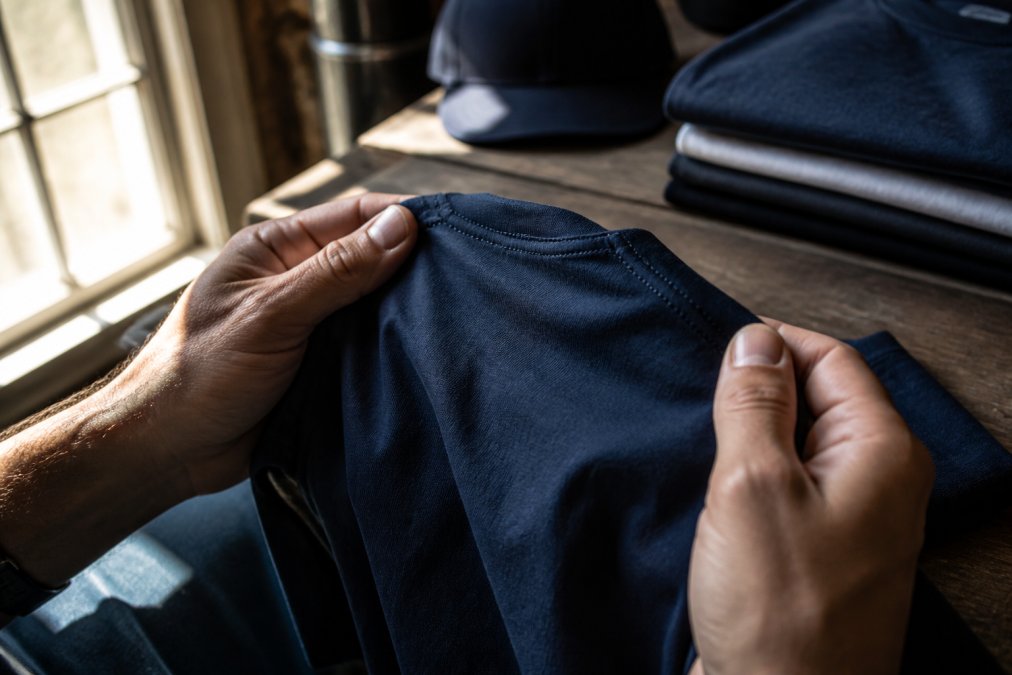
Ring-spun cotton, which is used in quality garment-dyed tees, costs significantly more to produce than the carded open-end cotton used in cheap fast-fashion basics. Ring-spun fibers are twisted tighter and longer, which creates a smoother, stronger, and more durable fabric. The difference is immediately obvious when you hold both in your hands.
Fabric weight matters too. A heavier-weight tee, think 6+ oz per square yard, uses more raw material per unit. That adds to the per-garment cost, but it's also what gives a shirt its structure and longevity. Lightweight throwaway tees save money at the mill and cost you money in replacements.
Responsible raw material sourcing also factors in. Brands that prioritize ethical cotton supply chains, track fiber origins, or use sustainable textile processes pay more upstream, and that cost flows through to the finished product. That's not a flaw in the pricing model. It's evidence of a better one.
Quality Control and Garment Durability
A common mistake brands make is treating quality control as an optional cost. It isn't. It's the cost of not selling garbage.
Small-batch and domestic production runs allow for tighter inspection at every stage: fabric inspection before cutting, seam checks during assembly, print or embroidery review before shipping. Mass production lines moving thousands of units per hour simply cannot replicate that level of attention.
Garment durability is where this investment pays off for the buyer. A shirt that holds its color, shape, and print after 50 washes isn't magic, it's the result of better fabric, better construction, and better finishing. The garment-dyed process used on quality cotton tees bonds color into the fiber rather than coating the surface, which means the color stays richer longer.
The Benefits of Domestic Clothing Manufacturing
Domestic clothing manufacturing costs more per unit than overseas mass production. That's the honest starting point. But the benefits of domestic clothing manufacturing extend well beyond the sticker price, and for community-focused brands, they're non-negotiable.
Ethical Labor Practices and Fair Wages
The price difference between a domestically manufactured garment and an imported one often comes down to one thing: what the workers were paid.
Factories operating under U.S. labor law must comply with Fair Labor Standards Act (FLSA) wage requirements, workplace safety standards enforced by OSHA, and federal overtime rules. Workers in domestic manufacturing facilities earn wages that reflect those protections. According to the U.S. Department of Labor's wage and hour guidance, minimum wage and overtime requirements apply to garment workers in the same way they apply across other industries, a baseline that many overseas production facilities simply do not meet.
Ethical labor practices aren't a premium add-on. They're the floor. When you buy from a brand committed to domestic or ethically verified production, you're not paying extra for virtue, you're paying the actual cost of making something without exploiting the people who made it.
Supply Chain Transparency and Shorter Logistics
Shorter supply chains are easier to audit and harder to hide problems in. That's a practical advantage, not just a feel-good one.
Overseas garment manufacturing often involves multiple tiers of subcontracting, where the brand placing the order may have limited visibility into where fabric was sourced, who cut and assembled the garments, or what standards were applied at each step. Supply chain transparency becomes nearly impossible when production crosses five countries and a dozen intermediaries.
Domestic and near-shore production collapses that chain. Fewer logistics handoffs mean lower shipping costs, faster turnaround times, reduced exposure to import duties and tariff fluctuations, and a much cleaner line of accountability from raw material to finished product.
For a community-focused brand, that transparency isn't just operationally useful. It's part of the value proposition.
Fast Fashion vs Slow Fashion Cost Comparison
The fast fashion vs slow fashion cost comparison is almost always framed wrong. People compare the upfront purchase price and conclude fast fashion wins. The actual comparison is more complicated, and more interesting.
Fast fashion is built on a model of extreme volume, minimal material cost, and planned obsolescence. A shirt that costs a few dollars to make and retails for under $20 is not designed to last. It's designed to be bought, worn a handful of times, and replaced. The business model depends on you coming back.
Slow fashion inverts that logic. Higher upfront cost, longer product life, fewer replacements. The per-wear math shifts dramatically over time.
| Factor | Fast Fashion | Premium Local Apparel |
|---|---|---|
| Upfront cost | Low | Higher |
| Expected wearable life | 10-20 wears | 100+ wears |
| Cost per wear | High (often $1+) | Low (often under $0.50) |
| Environmental footprint | High (frequent replacement) | Lower (longer lifecycle) |
| Labor standards | Often unverified | Verifiable or domestic |
| Resale or donation value | Minimal | Retains some value |
The table tells a clearer story than the price tag does.
The Hidden Cost of Returns and Waste
Here's what most guides on apparel pricing skip entirely: the cost of returns and textile waste is enormous, and fast fashion absorbs it by externalizing it onto consumers and the environment.
When a cheap garment doesn't fit right, fades after three washes, or falls apart at the seams, the buyer absorbs the loss. They either keep something unwanted or go through the hassle of a return. Many fast fashion retailers have return rates that would stagger most industries, and the environmental cost of processing, transporting, and often landfilling returned garments is real. According to the EPA's overview of textile waste in the United States, textiles represent a significant and growing share of municipal solid waste, much of it driven by short-lifecycle fast fashion.
Premium apparel built to last generates far fewer returns due to quality failures, and far less waste over a multi-year ownership cycle. That's a hidden saving that never shows up in the purchase price comparison.
Long-Term Cost-Per-Wear: Why Premium Local Apparel Wins
Cost-per-wear is the most honest way to evaluate clothing value. Premium local apparel wins this calculation consistently.
The math is simple: divide the purchase price by the number of times you wear the garment. A $33 tee worn 100 times costs $0.33 per wear. A $12 tee worn 15 times before it fades, shrinks, or falls apart costs $0.80 per wear. The cheap shirt costs more per use.
What drives that difference? Garment durability. Ring-spun cotton holds its shape. Garment-dyed color stays vibrant. Properly finished seams don't unravel. These aren't luxury features, they're engineering decisions that extend product life and reduce the replacement cycle.
For fans and community members who plan to wear their gear regularly, to games, to local events, around the neighborhood, the cost-per-wear argument is particularly strong. A hoodie you wear every week for two years at $49 is one of the better clothing investments you can make.
Small-Batch Production and Custom Apparel Pricing
Small-batch production is more expensive per unit than mass production. There's no way around that, and any brand claiming otherwise is either misleading you or cutting corners somewhere else.
Here's why: economies of scale are real. A factory producing 50,000 identical shirts spreads setup costs, fabric cutting dies, screen printing setup, embroidery digitization, across a massive run. A brand producing 200 units of a custom apparel design carries those same setup costs across far fewer pieces.
The result is a higher per-unit cost. But it comes with meaningful tradeoffs in the other direction:
- Exclusivity: Small-batch runs mean fewer people own the same piece. That matters for community gear with regional identity.
- Flexibility: Smaller runs allow for design iteration, seasonal releases, and community-responsive product decisions.
- Accountability: It's much easier to maintain quality assurance over 200 units than 200,000.
For niche apparel tied to a specific community, movement, or identity, small-batch production isn't a compromise. It's the right model.
The Psychology of Pricing and Brand Equity
Price signals quality. That's not a cynical observation, it's a well-documented aspect of consumer behavior, and it shapes how buyers evaluate apparel before they've even touched the fabric.
A shirt priced at $33 communicates something different than one priced at $8. The higher price sets an expectation of quality, durability, and intentionality. When the product then delivers on those expectations, soft fabric, clean print, solid construction, it creates the kind of brand equity that generates repeat buyers and word-of-mouth.
The psychology works in reverse too. Brands that chronically discount, race to the bottom on pricing, or position themselves as the cheapest option train their customers to expect low quality. Rebuilding from that position is very hard.
For community-focused brands, brand equity carries an additional dimension. When the apparel represents a place, a movement, or a shared identity, the price becomes part of the statement. Wearing gear that cost you something signals genuine investment in what it represents.
As Harvard Business Review's research on consumer brand perception has consistently shown, consumers use price as a proxy for quality when other information is limited, and in apparel, that heuristic is particularly strong.
Northwest Indiana Gear That's Worth Every Dollar
This is where the theory meets the actual product.
Indiana Bears Progress gear is built on the Comfort Colors 1717 platform, a garment-dyed, 100% ring-spun cotton tee that's widely regarded as one of the best blanks in the custom apparel industry. The soft-washed finish gives it a broken-in feel from day one, and the garment-dye process means the color is part of the fabric, not sitting on top of it. These aren't arbitrary choices. They're the reason the shirt still looks good after a year of regular wear.

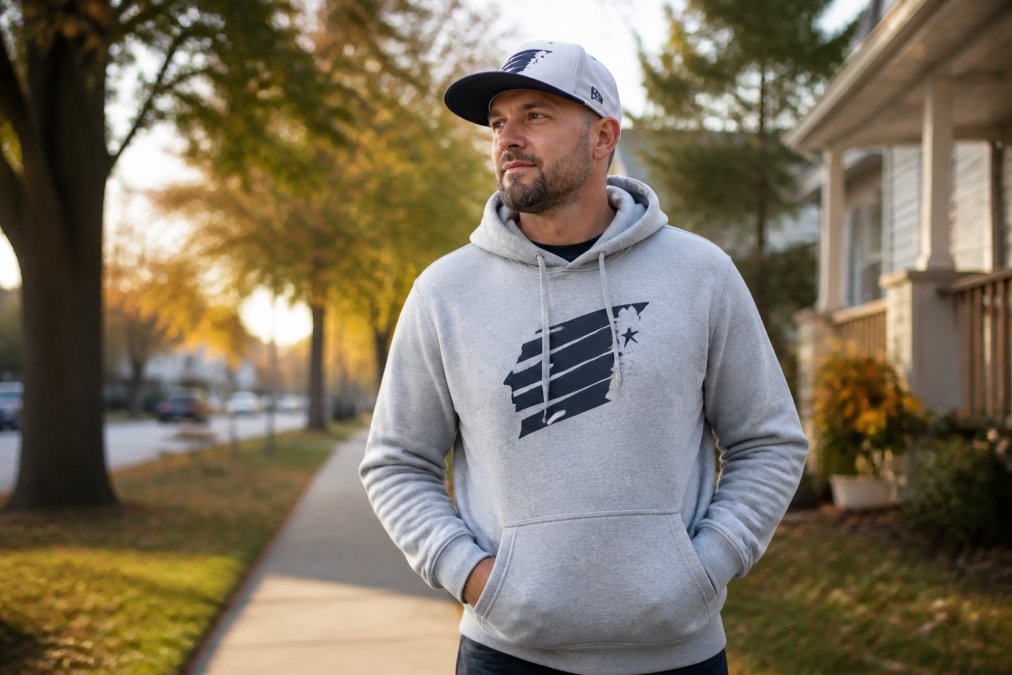
The Indiana Bears - The Region T-shirt and Indiana Bears - Section 219 T-shirt are both priced at $32.99, which, measured against their build quality and the cost-per-wear math above, is genuinely competitive pricing for what you're getting.
The Indiana Bears - Section 219 Gray Fleece Hoodie at $48.99 uses the Lane Seven LS14001 construction: a soft fleece interior with a structured exterior that handles bold print and embroidery without distortion. It's the kind of hoodie you reach for first when the weather turns.

What makes Indiana Bears Progress different from generic regional apparel isn't just the product specs. It's that every piece is tied to something real: the movement to bring the Chicago Bears to Northwest Indiana, the pride of a region that's been overlooked for too long, and a community of people who want to wear that identity on their sleeve, literally. The gear isn't just merchandise. It's a statement.
The real question isn't whether premium local apparel costs more. It does. The question is whether the difference is worth it, and for anyone who's worn a quality garment long enough to see a cheap one fall apart, the answer is obvious.
Frequently Asked Questions
Is $40 a lot to pay for a locally made shirt?
For a mass-produced shirt with no transparency on materials or labor, $40 is steep. For a garment-dyed, ring-spun cotton tee made in small batches with ethical labor practices, it's fair. The Indiana Bears Region T-shirt at $32.99 uses Comfort Colors 1717 construction, a blank known for durability and soft-wash finish. Worn regularly, the cost-per-wear drops well below a dollar within a year, which undercuts most fast fashion alternatives that fade or shrink after a few washes.
Why is it more expensive to manufacture clothing domestically?
Domestic garment manufacturing means paying wages that comply with federal Fair Labor Standards Act minimums, covering domestic overhead costs, and sourcing materials without the benefit of low-cost offshore supply chains. Factories here also operate under OSHA workplace safety standards, which add compliance costs. The result is a higher per-unit price, but also traceable supply chains, faster quality control turnaround, and no import duties or cross-border logistics delays that can quietly inflate landed costs on imported goods.
What does 'premium apparel' actually mean?
Premium apparel refers to clothing built with above-average fabric weight, tighter construction standards, and finishes that hold up over time, things like garment dyeing, reinforced seams, and ring-spun cotton. It also typically involves smaller production runs with stricter quality assurance checks at each stage. For community-focused brands, premium also means the design carries meaning: it represents something real, like regional identity or a movement, rather than generic graphics applied to the cheapest available blank.
How do economies of scale affect clothing prices?
Large fast fashion retailers manufacture millions of identical units, spreading fixed costs, design, sampling, machinery, overhead, across a massive volume. That drives the per-unit price down dramatically. Small-batch and local producers don't have that volume buffer, so each unit carries a larger share of production costs. Custom apparel for niche communities, like Northwest Indiana fan gear, compounds this: lower order quantities mean higher per-item pricing, but the trade-off is exclusivity and designs you genuinely won't find anywhere else.
Cheap gear wears out, gets replaced, and costs more over time. Indiana Bears Progress offers an alternative: apparel built to last, tied to a community worth representing, at prices that make sense when you run the actual math. The Indiana Bears - Series One - Section 219 T-shirt is a solid place to start. Order today and wear something that means something.
This article was written using GrandRanker