


Table of Contents
- Why Your Apparel Return Policy Matters
- Defining Your Apparel Return Policy
- Apparel Return Policy Best Practices
- E-Commerce Return Policy Template
- Reducing Return Rates for Online Clothing Stores
- Communicating Your Policy to Customers
- Conclusion
Last Updated: August 27, 2026
Why Your Apparel Return Policy Matters
A clear apparel return policy builds customer trust and reduces checkout friction. When customers know exactly what happens if a shirt doesn't fit or arrives damaged, they're more likely to complete the purchase. For small apparel businesses competing against massive retailers, a well-designed return policy protects your margins from fraud while making customers feel safe buying from you.
Indiana Bears Progress understands this challenge, our community-focused apparel requires the same careful approach to returns as any other online clothing store. Whether you're selling premium hoodies like our Indiana Bears Blue Bear Hooded Sweatshirt or simple branded tees, your return policy shapes how customers perceive your brand.

Defining Your Apparel Return Policy
Your apparel return policy has three core components: the return window, product condition requirements, and who pays for shipping.
Return window is the timeframe customers have to initiate a return. For apparel, 30 days strikes the right balance, long enough for customers to try items at home, but short enough to protect your inventory and margins.
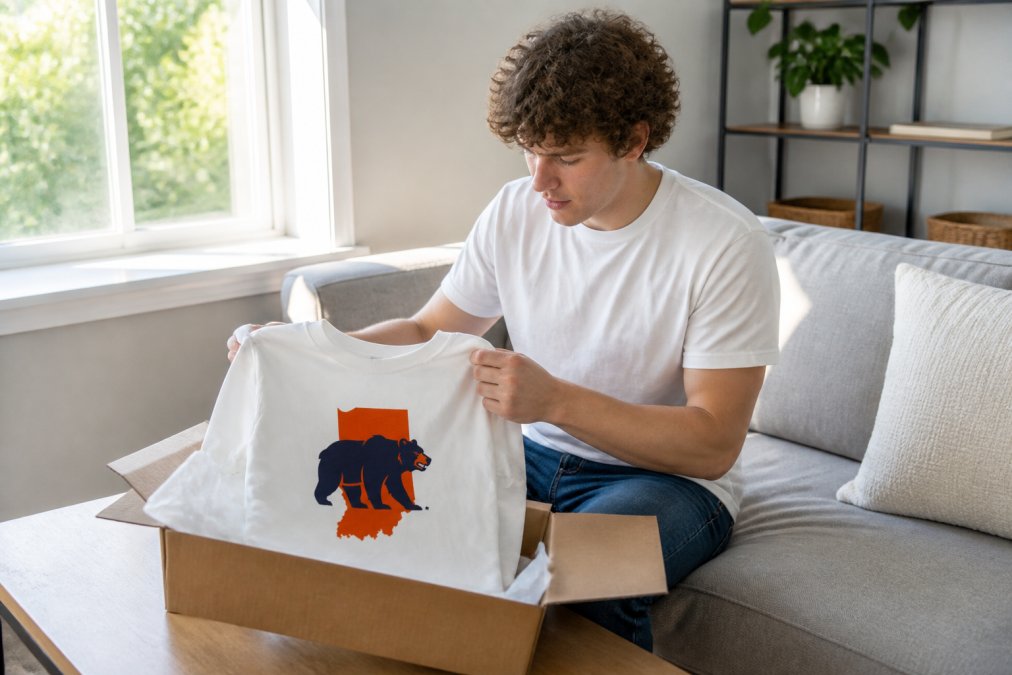
Product condition requirements define what "returnable" means. Be specific: items must be unworn, unwashed, with original tags attached and original packaging intact. For items like our Indiana Bears The Region T-shirt, that standard is straightforward to enforce. Custom or personalized items deserve special handling because they can't be resold.
Setting a Return Window
Most apparel retailers use 30 days as their standard return window. This gives customers enough time to receive the item, try it on, and decide whether to keep it. Some brands extend to 60 days during peak seasons to encourage purchases, while others cut to 14 days to minimize fraud. Whatever window you choose, communicate it clearly at checkout and in your order confirmation email.
Defining Product Condition Requirements
State exactly what condition items must be in to qualify for a refund. The gold standard for apparel is: unworn, unwashed, with original tags attached, and in original packaging. This eliminates gray areas where someone wears an item once and tries to return it.
For items like our Indiana Bears Section 219 Gray Fleece Hoodie, a customer who's worn it once will show wear in the collar or sleeves. Be explicit about what disqualifies an item: pilling, fading, odors, stains, stretched seams, or any sign of wear. Take photos of returned items and document condition to protect yourself if a customer disputes a denial.

Handling Return Shipping Costs
You have three options: customer pays, you pay, or split the cost.
Customer pays is most common for small businesses. It's straightforward and deters frivolous returns, but some customers feel punished for a purchase that didn't work out.
You pay is customer-friendly but expensive. Offering free return shipping increases your return rate by 10-20%, which may be unsustainable for small margins (peer-reviewed research).
Split cost or store credit is a middle ground. You might offer free returns if the customer accepts store credit instead of a cash refund. Whatever you choose, make it clear at checkout. Hidden shipping costs are the #1 reason customers dispute returns or leave negative reviews.
Apparel Return Policy Best Practices
Managing Restocking Fees
A restocking fee is a percentage of the purchase price you deduct from the refund when an item is returned in perfect condition. Restocking fees typically range from 10-20% and reduce frivolous returns (the FTC). A customer who knows they'll lose 15% is more likely to check sizing carefully before ordering.
State your restocking fee clearly in your return policy and remind customers in their order confirmation. Some brands waive restocking fees for defective items or valid reasons like wrong size, showing good faith while protecting yourself from buyer's remorse returns.
Handling Personalized and Custom Items
Personalized or custom apparel cannot be resold. Make personalized items final sale with no returns. State this clearly at checkout and in the product description. If you do allow returns on custom items, refund only a portion of the price, perhaps 50%, since you'll have to scrap the item.
Protecting Against Return Fraud
Protect yourself with these practices:
Require proof of purchase. Verify that the customer actually bought the item from you before processing a return.
Inspect returned items. When an item arrives, inspect it for signs of wear, washing, or damage. Take photos and document everything. If it shows wear, deny the return and explain why.
Use return authorization numbers. Require customers to get a return authorization (RA) number before shipping items back. This tracks who initiated the return and prevents random packages from arriving at your warehouse.
Flag patterns. If the same customer initiates multiple returns or returns high-value items repeatedly, investigate. You can refuse service to chronic returners.
Verify refunds carefully. Before issuing a refund, make sure the returned item matches the original order. If something's off, hold the refund and contact the customer.
E-Commerce Return Policy Template
Here's a template you can adapt for your small apparel business:
Our Return Policy
We want you to love what you buy from us. If you're not satisfied with your purchase, we make returns simple.
Return Window: You have 30 days from the date of purchase to initiate a return. Items must be returned within 45 days of purchase.
Condition Requirements: Items must be unworn, unwashed, and in original condition with all tags attached and original packaging intact. Items showing signs of wear, washing, or damage will not be accepted for return.
Return Shipping: Customers are responsible for return shipping costs. We recommend using tracked shipping so you can confirm delivery. Once we receive and inspect your return, we'll process your refund within 5-7 business days.
Refund Amount: Full refunds are issued for items meeting our return requirements. A 15% restocking fee applies to all returns. Personalized or custom items are final sale and non-returnable.
Exceptions: Final sale items, clearance items, and items purchased more than 30 days ago are not eligible for return. Items damaged due to customer misuse are not returnable.
How to Return: Email us at [your email] with your order number. We'll send you a return authorization number and instructions for shipping your item back.
Adapt this template to your brand voice and specific terms. Make it scannable with bold headings and short paragraphs.
Reducing Return Rates for Online Clothing Stores
The best return policy is one you never have to use. Reduce your return rate by addressing root causes: sizing confusion, unclear product descriptions, and quality issues.
Accurate Product Descriptions and Sizing
Most apparel returns happen because the item didn't fit or look like the customer expected (peer-reviewed research). For each item, include exact measurements (chest width, length, sleeve length in inches), fabric composition, care instructions, and fit notes ("runs small, size up" or "true to size"). Create a detailed size chart specific to each item. Include customer photos and reviews, real people wearing your apparel in real settings beat professional product shots every time.
Clear Policy Communication
Your return policy should be visible in at least three places: your website footer, your product pages, and your checkout flow. Include your policy in order confirmation emails. For items like our Indiana Bears Blue Bear T-Shirt, clarity about fit and sizing reduces returns significantly.
Quality Assurance
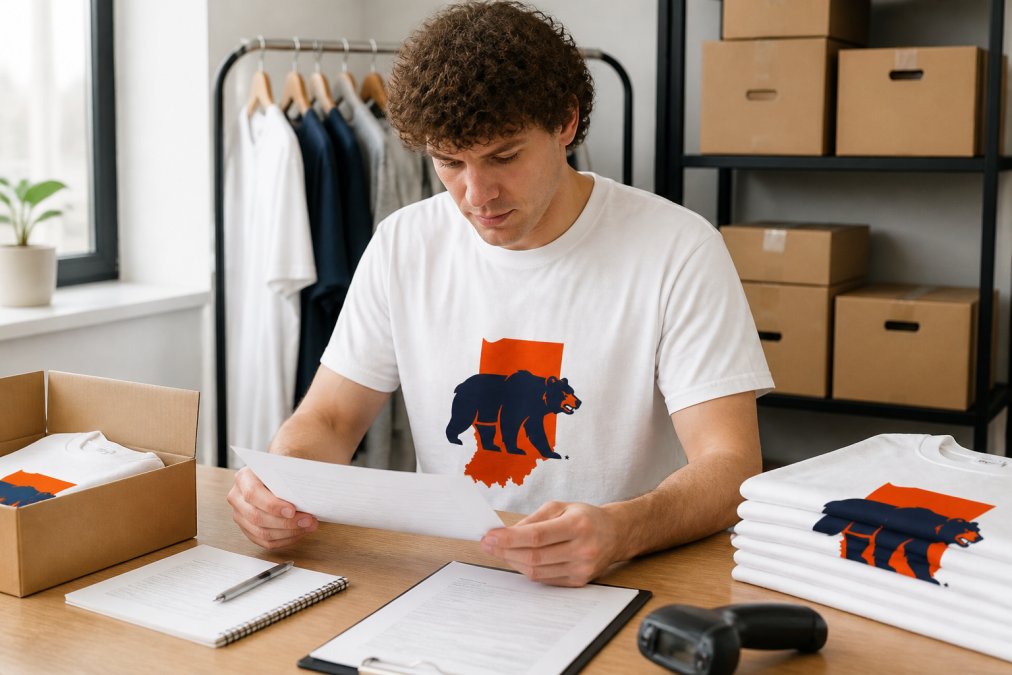
Returns spike when items arrive damaged or defective. Inspect items before shipping. Check seams, hems, prints, and packaging. A few minutes of inspection prevents returns, refunds, and negative reviews.
Communicating Your Policy to Customers
Your return policy only works if customers actually know about it.
At checkout: Display your return policy prominently. A customer who sees your policy before clicking "buy" is less likely to be surprised later.
In order confirmation: Include your full return policy in the order confirmation email. This is often when a customer reads it carefully.
On product pages: Link to your return policy from each product page. Customers considering a purchase want to know the stakes.
On your homepage: Link to your return policy in the footer as a standard part of your website navigation.
In customer service responses: When customers email with questions, include a link to your return policy. Many questions disappear once customers read it.
Use clear language: Avoid legal jargon. Write in plain English with short sentences and active voice. A customer should understand it without a law degree.
Building a strong apparel return policy takes work, but it pays off. A clear policy reduces fraud, cuts operational chaos, and builds customer trust. Start with the template above, adjust it to match your business, and communicate it relentlessly.
At Indiana Bears Progress, we're committed to quality apparel and gear that represents Northwest Indiana pride. Our return policy reflects that commitment, we stand behind our products while protecting our business from abuse. When customers know exactly what to expect, everyone wins.

The apparel industry is competitive. Your return policy is one of the few things you control completely. Make it work for you.
Frequently Asked Questions
Q: What is a reasonable return window for an apparel return policy?
A: Most online clothing retailers offer 30-day return windows, which balances customer satisfaction with operational efficiency. Some extend to 60 days during peak seasons or for premium items. Your return window should align with your business model and customer expectations. Shorter windows (14-21 days) work if you emphasize quality and accurate sizing; longer windows build customer confidence but increase reverse logistics costs and return fraud risk.
Q: How do I use an e-commerce return policy template to protect my business?
A: A solid e-commerce return policy template should specify your return window, condition requirements, restocking fees, and shipping cost responsibility. Include clear definitions of 'unworn condition' and 'original packaging.' State your proof of purchase requirements and explain how you handle damaged goods. Templates help you document your terms consistently, reduce customer confusion, and provide legal protection. Make sure your policy is visible at checkout and in order confirmations.
Q: What apparel return policy best practices reduce disputes?
A: Best practices include: clearly communicating your policy before purchase, requiring proof of purchase for all returns, defining acceptable condition (unworn, tags attached, original packaging), offering store credit as an alternative to refunds, implementing return authorization numbers to track returns, and handling exceptions transparently. Being specific about personalized items, final sale categories, and restocking fees prevents misunderstandings. Consistency in enforcement builds customer trust and reduces chargebacks.
Q: How can I reduce return rates for online clothing stores?
A: Accurate product descriptions, detailed sizing charts, and high-quality product photos cut returns significantly. Include measurements in inches for key areas (chest, length, sleeve). Offer easy access to customer support before purchase so buyers can ask sizing questions. Use customer reviews to highlight fit and quality. Ensure your merchandise quality matches customer expectations, premium apparel like our DryBlend® t-shirts and Heavy Blend™ hoodies justify higher prices and reduce buyer's remorse returns.
This article was written using GrandRanker