


Table of Contents
- What the Northwest Indiana Stadium Build Actually Involves
- Public Funding for Sports Stadiums: Pros and Cons
- How to Contact Local Representatives About Development Projects
- How to Support the Northwest Indiana Stadium Through Community Action
- How Stadium Districts Compare: Lessons From Other Regions
- Rep the Movement With Indiana Bears Gear
- Conclusion
Last Updated: August 13, 2026
What the Northwest Indiana Stadium Build Actually Involves
The northwest Indiana stadium build is one of the most significant infrastructure proposals the region has seen in decades. At Indiana Bears Progress, we've been tracking every development since the conversation first gained real momentum, and the scale of what's being proposed is genuinely worth understanding before you decide how to get involved.

Indiana Bears - Classic Dad Cap
This isn't just a sports story. It's a civic one. Below, we'll walk through the structural mechanics of the project, how public funding works, what you can actually do to push it forward, and why getting involved now matters more than waiting.
Stadium Authority Creation and Legislative Approval
A stadium authority is a government-created entity specifically established to oversee the financing, construction, and operation of a major sports venue. For a northwest Indiana stadium to move forward, the Indiana General Assembly would need to pass legislation creating such an authority, granting it the power to issue bonds, acquire land, and enter into agreements with private partners.
That process runs through the state's legislative session, where bills must clear committee review, floor votes in both chambers, and ultimately the governor's signature. Fast-track processes are possible when there's strong political will, but they typically require coordinated pressure from constituents, local governments, and economic development stakeholders. Legislative amendments can reshape the project's scope, funding structure, or timeline at any stage, which is why sustained community engagement matters throughout the session, not just at the beginning.
Public-Private Partnership Structure and Bond Issuance
The most common financing model for major stadium projects is a public-private partnership, where a government entity and a private organization share both the costs and the benefits of development. In practical terms, that often means the public side issues municipal bonds to fund infrastructure like roads, utilities, and the stadium shell, while the private partner covers operational costs and contributes capital toward construction.
Bond issuance is the mechanism by which governments borrow money from investors, promising to repay it with interest over time, typically using a combination of tax revenue and stadium-generated income. The fiscal impact of that arrangement depends heavily on the deal's structure. According to Brookings Institution analysis on stadium financing, the terms of public-private agreements vary enormously, and the long-term value to taxpayers hinges on how revenue-sharing provisions are written into the original legislation.
Public Funding for Sports Stadiums: Pros and Cons
Public funding for sports stadiums is one of the most debated topics in urban economic development. The honest answer is that it's complicated, and anyone advocating for the northwest Indiana stadium build should understand both sides before making the case to neighbors, elected officials, or skeptics.
The Case for Taxpayer Investment in Regional Infrastructure
The strongest argument for public investment isn't really about football. It's about what a stadium district can anchor. When a fixed-roof stadium becomes the centerpiece of a broader mixed-use development, it tends to catalyze investment in hotels, restaurants, retail, and transit infrastructure that wouldn't otherwise materialize in that location.
For Northwest Indiana specifically, the economic development argument carries extra weight. The region has significant industrial history but has faced long-term challenges attracting the kind of commercial investment that generates sustained tax revenue and employment. A stadium project with a well-structured public-private partnership could accelerate land acquisition and zoning changes that benefit the broader community, not just sports fans.
Regional infrastructure improvements, including transportation logistics upgrades, parking capacity expansion, and utility buildout, typically accompany large stadium projects and create lasting value regardless of what happens on the field.
Legitimate Concerns Worth Understanding
The case against public funding is also real. Many economists argue that the economic impact projections attached to stadium proposals are routinely overstated, because they count spending that would have happened elsewhere in the local economy anyway. According to National Bureau of Economic Research working papers on stadium economics, independent analyses frequently find smaller net fiscal impacts than the projections commissioned by project proponents.
There are also questions about opportunity cost. Capital financing directed toward a stadium is capital not directed toward schools, roads, or public services. Understanding this tension doesn't make you a bad advocate; it makes you a better one, because you'll be prepared to address it directly when it comes up.
How to Contact Local Representatives About Development Projects
Contacting local representatives about development projects is most effective when you're specific, timely, and persistent. A single email rarely moves anything. A pattern of constituent contact, especially when coordinated across a community, gets noticed.

Step 1: Identify the Right Officials
The northwest Indiana stadium project touches multiple layers of government. Your state legislators, specifically your Indiana House and Senate representatives, are the primary targets because legislative approval is the gateway to everything else. Your county commissioners and municipal council members matter too, particularly on questions of zoning requirements, land acquisition, and local infrastructure investment.
You can find your Indiana state legislators by entering your address into the Indiana General Assembly's legislator lookup tool. For local officials, check your county or city government's official website. Make a short list: state rep, state senator, and at least one local council member.
Step 2: Write or Call with a Clear Message
The most common mistake in constituent outreach is being vague. "I support the stadium" is easy to ignore. A message that references the specific economic development benefits for the region, acknowledges the public support behind the project, and asks for a concrete action is much harder to dismiss.
Keep calls under three minutes. Identify yourself as a constituent, state your position, name the specific project, and ask the representative to support or co-sponsor relevant legislation. For written messages, one focused paragraph beats three rambling ones every time.
A simple message framework:
"My name is [Name], and I'm a resident of [City/Town]. I'm writing to express my support for the Northwest Indiana stadium development proposal. This project represents a significant economic development opportunity for our region, and I'd ask you to support legislation that enables it to move forward. Thank you for your time."
Step 3: Show Up to Public Hearings and Community Meetings
Written contact matters, but physical presence at public hearings sends a signal that written messages alone cannot. When officials see a packed room of constituents who care enough to show up on a Tuesday night, it changes the political calculus.
Watch for notices of public hearings through your local government's website, local news outlets, and Indiana Bears Progress updates. When are scheduled, bring your message, stay for the full session, and sign in so your attendance is on the record.

Indiana Bears - Section 219 Yard Sign
How to Support the Northwest Indiana Stadium Through Community Action
Supporting the northwest Indiana stadium build doesn't require a political science degree or a connection to the project team. Grassroots pressure is built from ordinary people taking small, consistent actions.
Share the Movement on Social Media
Social media reach creates public support visibility, which matters to elected officials who track constituent sentiment. When you post about the project, use consistent language that ties back to the economic development and community identity angles. Tag your state representatives directly. Share news updates from credible sources. Encourage friends and family in the region to do the same.
The goal isn't virality. It's a steady, visible signal that a real community of people cares about this outcome.
Environmental and Community Impact: What to Know Before You Advocate
A complete picture of the northwest Indiana stadium build includes its environmental and community footprint. Site feasibility studies for major projects typically include environmental impact assessments that evaluate soil conditions, water management, traffic generation, and displacement of existing land uses.
Advocates who understand these dimensions are more credible and more effective. If the chosen stadium site requires remediation of industrial land, that's actually a community benefit worth highlighting. If traffic and parking capacity are concerns for adjacent neighborhoods, those are legitimate issues that deserve real answers from project planners, not dismissal.
Engaging with these questions honestly, rather than avoiding them, builds the kind of broad public support that sustains a project through the years it takes to move from proposal to groundbreaking.
How Stadium Districts Compare: Lessons From Other Regions
Stadium districts that have succeeded as economic anchors share a few consistent characteristics: a mixed-use development plan that extends beyond the venue itself, strong transit connections, and a public-private partnership structure that aligns financial incentives over the long term.
The failures tend to share a different pattern: venues built in isolation without complementary development, inadequate transportation logistics planning, and deals where public capital financing wasn't matched by private investment of comparable scale.
For the northwest Indiana stadium project, the most relevant comparison points are mid-sized stadium districts that were built to serve regional fan bases rather than dense urban cores. These projects succeeded when they treated the stadium as an anchor for a broader destination, not the destination itself. Parking capacity, retail mix, and transit access all proved as important as the venue design in determining whether the district generated sustained economic activity or sat quiet outside of game days.
The lesson for advocates is straightforward: push for a comprehensive stadium district vision, not just a building. The more the project is framed around regional infrastructure and economic development, the stronger the case becomes for the public investment it will require.
Factor |
Successful Stadium Districts |
Struggling Stadium Districts |
|---|---|---|
Development scope |
Mixed-use district with retail, dining, hotels |
Standalone venue with surface parking |
Transit access |
Direct transit connections, walkable design |
Car-dependent, limited transit options |
Partnership structure |
Shared revenue and aligned incentives |
Public risk, private upside |
Community engagement |
Broad public support built early |
Limited outreach, reactive to opposition |
Infrastructure investment |
Roads, utilities, transit upgraded in tandem |
Venue-only capital project |
Rep the Movement With Indiana Bears Gear
Supporting the northwest Indiana stadium build isn't only about emails and hearings. Visibility matters too, and wearing your support makes the movement tangible in the community.
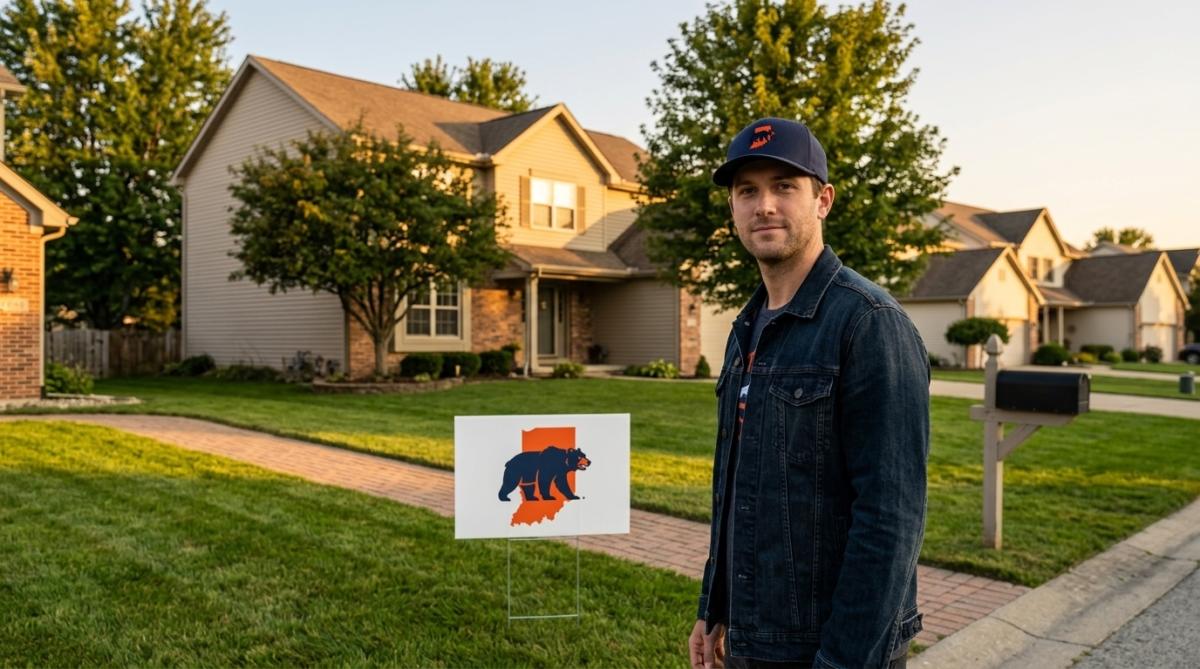
Indiana Bears Progress carries gear designed specifically for this community. The Indiana Bears Classic Dad Cap is made from 100% cotton and built for everyday wear at $29.99. It's the kind of piece that starts conversations, which is exactly the point.
If you want to make the statement in your yard, the Indiana Bears Section 219 Yard Sign and the Indiana Bears Yard Sign are both $27.99, made from durable fluted polypropylene with an aluminum h-stake stand. Plant one in your front lawn and you're adding to the visible public support that politicians and media notice when they drive through the region.

Indiana Bears - Yard Sign
Every purchase directly supports Indiana Bears Progress and the mission of keeping this community informed and engaged as the project develops. Order today and rep the region you're fighting for.
Frequently Asked Questions
Where in Northwest Indiana could the Bears build a stadium?
Hammond has emerged as the most frequently discussed site for a potential Northwest Indiana stadium build. The area offers proximity to major transportation corridors and existing regional infrastructure. Site feasibility studies would need to assess land acquisition, zoning requirements, parking capacity, and transportation logistics before any stadium site receives final approval. No official site has been confirmed, so following Indiana Bears Progress for updates is the best way to stay current.
How will Indiana fund the Bears stadium?
Funding discussions center on a public-private partnership model combining bond issuance, capital financing from private investors, and some form of taxpayer-backed infrastructure investment. Legislative approval through the Indiana General Assembly would be required to create a stadium authority and authorize any public funding. The specific fiscal impact on residents depends on the final deal structure, which is still being negotiated and debated during legislative sessions.
What are the economic benefits of a stadium project for the region?
Proponents point to economic development gains including job creation during construction and operations, increased regional tourism, new revenue generation from hospitality and retail in a stadium district, and long-term property value growth near the site. Critics note that economic impact projections for stadium projects have historically been overstated, so it is worth reviewing independent fiscal impact analyses rather than relying solely on figures from project advocates.
How can local residents participate in public hearings about the stadium?
Residents can participate by monitoring announcements from the Indiana General Assembly and local municipal governments for scheduled public hearings. Contacting your state representative or state senator ahead of any legislative session gives your voice weight before votes occur. Showing up in person, submitting written comments, and coordinating with community groups focused on the Northwest Indiana stadium build all strengthen public support signals that elected officials track closely.
This article was written using GrandRanker